

Keynote Title:
(Coming Soon!)
Keynote Description:
(View in ASL – Click here)
Educational Objective:
Bio:
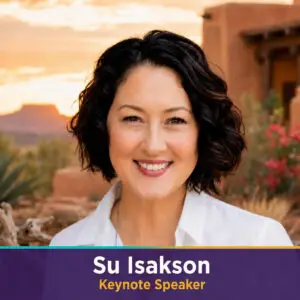
Su Kyong Isakson, MA, NIC, EIPA 5.0, is an Associate Professor of Interpreting with 15 years of professional experience consulting, presenting and training internationally. Informed by her formative experience as a Korean-American raised by deaf parents, she is passionate about how intercultural communication informs our work as interpreters.
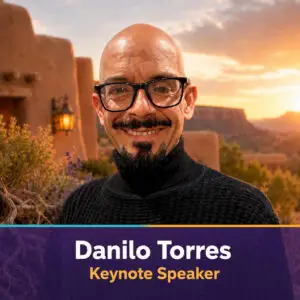
Danilo E. Torres V. is a Deaf Colombian-American educator, multilingual interpreter, accessibility advocate, and community leader. He serves at Gallaudet University’s Center for Black Deaf Studies. With extensive experience in International Sign, higher education, and global engagement, he promotes equitable opportunities for Deaf communities worldwide through collaboration.
RID CEUs Offered: .10
Plenary Title: “From Roots to Radiance: Centering Deaf Knowledge in Interpreter Education”
Plenary Description:
Before interpreting can occur, an interpreter must understand the source language, its people, and the cultural knowledge through which meaning is created. Yet interpreter education has sometimes treated advanced ASL competence and Deaf expertise as assumed foundations rather than areas requiring sustained attention and meaningful Deaf leadership. This presentation distinguishes language competence from interpreting competence while showing why neither can be developed in isolation from the Deaf community. The presenter will connect the history of ASL, interpreter certification, Deaf education, and the professionalization of interpreting with his experiences as a Deaf native signer, ASL educator, CDI, and interpreter educator.
This presentation is not an argument against hearing interpreter educators or the interpreting profession. It is an invitation to examine the structures we have inherited, recognize expertise that has too often remained at the margins, and develop more reciprocal relationships between Deaf professionals and interpreter-training programs. Through historical reflection, visual storytelling, and practical examples, participants will consider who defines ASL mastery, how Deaf knowledge is incorporated into curricula, and what genuine partnership can look like. The goal is not to assign blame, but to strengthen interpreter education by reconnecting its future radiance to its linguistic and cultural roots.
Educational Objective:
1) Identify at least three historical developments that have shaped the relationship between Deaf people, ASL instruction, and interpreter education.
2) Evaluate whether their programs meaningfully incorporate Deaf professionals as intellectual and curricular partners rather than primarily as language models or consumers.
3) Recommend some practical changes that can strengthen collaboration between Deaf communities, ASL educators, and interpreter educators.
Bio:
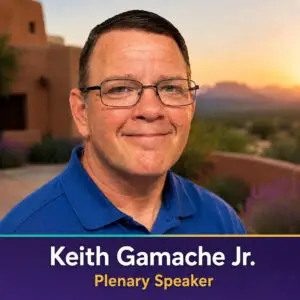
Keith Gamache, Jr. (KJ) is an ASL professor at Irvine Valley College and has taught ASL, Deaf Studies, and Interpreting for nearly 30 years. He holds a PhD from Gallaudet University and both ASLTA Master and CDI certifications. KJ currently focuses on teaching pedagogy, interpreted work research, and ASL linguistics.
RID CEUs Offered: .10
Plenary Title:
(Coming Soon!)
Plenary Description:
Educational Objective:
Bio:
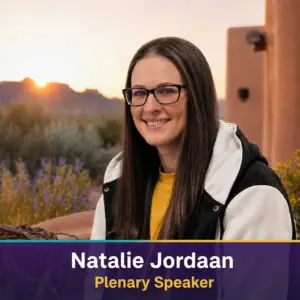
Natalie Jordaan is a Deaf software developer, AI educator, and founder of DeafGeeky in South Africa. Passionate about making artificial intelligence accessible, she empowers Deaf communities through simple, practical AI education. With over 14 years of software development experience, Natalie helps educators, professionals, and creators use AI to increase accessibility, creativity, confidence, and independence.
RID CEUs Offered: .10
Plenary Title: Nested Context: Tools for Renewing Interpreting in the AI Moment
Plenary Description:
AI is already changing how we work, communicate, and access information. What happens when it begins doing more of the work interpreters do? What if sign language recognition (SLR) by artificial intelligence (AI) becomes comparable to the receptive skills of most interpreters? Using “nested contexts” – think of Russian matryoshka dolls where each doll fits neatly inside a slightly larger one – this presentation looks beyond individual interpreter performance to explore historical trends and the larger social environment surrounding interpreted interaction. Is AI our competitor? Our Partner? Both? The AI challenge opens up the social situations in which interpreting occurs, inviting the members of CIT to make a fresh, proactive contribution to today’s intersectional challenges. We introduce CoSET S.A.F.E. AI, a think tank devoted to upholding the integrity of communication during interpreted interaction. Rather than simply asking whether AI will change interpreting, CoSET S.A.F.E. AI asks: How can interpreter educators help shape that change? The field needs tools to strengthen cognitive skills for interpreters and also primary communicators, both h/Hearing and Deaf. These tools build competence for the range of ‘moves’ and ‘turns’ possible during interpreted interaction. On the basis of accumulated professional wisdom, interpreter educators can inform and guide the ways that AI interpreting is distributed through society.
Educational Objective:
Participants will be able to:
1) Define the concept of “nested contexts” using at least one example across three or more levels of ‘nesting’
2) Illustrate an example of how shifts among or across nested contexts affect the cooperation required among primary communicators and interpreter(s)
3) Analyze an interpreted interaction for the range of possible “moves” and “turns” available to participants
Bio:
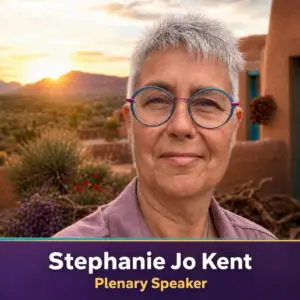
Stephanie Jo Kent, CI, PhD. Steph, an ethnographer and interpreter, believes interpreted interaction works best when the conditions are designed for people—not just technology. Her action research explores how languages, cultures, and AI can strengthen the integrity of communication by supporting human collaboration among equals, enabling understanding to flow both ways.
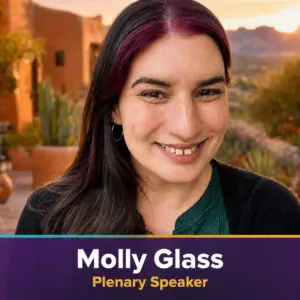
Molly Glass is a Deaf Interpreter, ASL Project Coordinator, and advocate with expertise in AI and hybrid driven sign language translation. As a member of the CoSET Leadership Circle, she works to ensure emerging technologies are designed with Deaf communities through ethical, inclusive, and language-first practices.
RID CEUs Offered: .10
Endnote Title: Rooted in What was, Radiant in What’s Next
Endnote Description:
Krieger and Bienvenu will present a synthesis of the conference presentations, highlighting key themes and insights while offering encouraging perspectives on the path ahead for CIT. With the emergence of AI and evolving approaches to teaching and learning, this closing presentation will invite interpreter educators to reflect on the future of interpreter education and the opportunities and challenges that lie ahead.
Educational Objectives:
Conference attendees will leave with food for thought and opportunities for critical self-reflection on their work as interpreter educators.
They will be able to:
1) Examine current approaches to interpreter education
2) Describe how today’s changing landscape—including the use of AI and other emerging technologies, as well as increasingly diverse classrooms that include both Deaf and non-Deaf students
3) Explain at least three ways on how we teach, learn, and prepare the next generation of interpreters.
Bio:
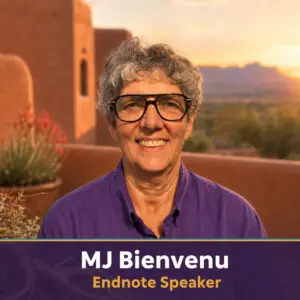
MJ Bienvenu is a pioneering Deaf ASL scholar, educator, and activist. A longtime Gallaudet University professor, she has advanced ASL, Deaf culture, bilingual and interpreter education, LGBTQIA+ activism, and social justice. Since 1983, she has helped shape interpreter education through her leadership with the Conference of Interpreter Trainers.
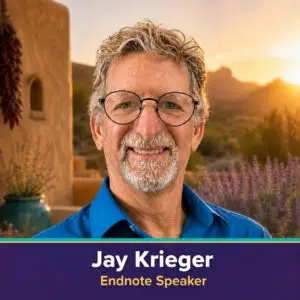
Jay Krieger is a Certified Deaf Interpreter with 15 years of interpreting experience, including 10 years in ASL-English translation, and more than 30 years of experience in technology. He was among the founders of the National Deaf Interpreter (NDI), Deaf Interpreter Conference (DIC), and the first National Deaf Translator (NDT) Summit. He is passionate about legal interpreting, translation, and innovation.
RID CEUs Offered: .10