
Title: “Integrating Kinesthetic Learning and Gamification in Consecutive ASL-to- English Interpreter Training”
Description:
This poster presents the Interpreting Relay Race, a kinesthetic, gamified activity for a first-year ASL-to-English Consecutive Interpreting course. It helps students allow adequate processing time while reducing performance anxiety and increasing engagement. Students move through the classroom while retaining and processing segments of a stimulus text. This builds problem-solving, spatial memory, collaboration, processing time, retention, and message accuracy. Combining movement and gamification creates a lower-pressure setting for experimentation, participation, and sustained engagement. The poster covers the activity’s structure, logistics, goals, student feedback, and how embodied, game-based methods may support interpreter skill development. Attendees will receive adaptable materials and practical strategies for teaching consecutive interpreting.
Educational Objective:
After engaging with this poster session, participants will be able to:
1) Describe the structure and implementation of a kinesthetic, gamified activity designed to teach consecutive ASL-to-English interpreting.
2) Evaluate how movement-based and game-based learning strategies can support processing time, message retention, and student engagement.
3) Adapt the Consecutive Interpreting Relay activity for use within their own interpreter education programs.
Bio:
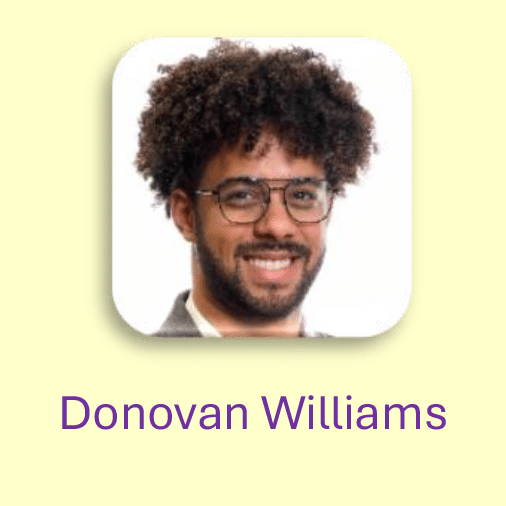
Donavan Williams, BA, NIC, BEI Master, is a full-time designated interpreter at the University of Arizona and an adjunct instructor in Phoenix College Interpreter Preparation Program. He brings nearly 12 years of professional interpreting experience to his work as an educator and holds both the National Interpreter Certification (NIC) and BEI Master certification. Donavan has been actively involved in interpreter mentorship and professional development throughout his career. He served as a mentor for the inaugural cohort of the Louisiana Commission for the Deaf statewide mentoring program and developed of an assessment tool used for participant selection and placement. He has presented at statewide interpreter conferences and delivered professional development
workshops for interpreters and interpreting students. As an interpreter educator, Donavan is interested in innovative teaching strategies, experiential learning, and student engagement. He believes students are co creators in their own learning and is passionate about increasing representation within interpreter education.
Title: “Introduction ASL-English Educational Interpreting Textbook”
Description:
This poster introduces the undergraduate textbook Introducing ASL-English Educational Interpreting, which
examines the developmental, legal, linguistic, and systemic complexities of interpreting for Deaf students in
PK–12 settings. Drawing on research, Deaf Studies, interpreter education, and policy, it presents interpreters as active educational professionals who shape language acquisition, academic access, literacy, and social-emotional outcomes. The text addresses IEP teams, language deprivation, curriculum access, ethics, Deaf Gain,
culturally affirming practices, diverse student needs, and commonly misunderstood interpreter responsibilities. It provides foundational guidance for interpreters, educators, and administrators seeking greater educational equity and better outcomes for Deaf students.
Educational Objective:
Learning Objectives
1) Examine how developmental, legal, and linguistic factors shape the role of ASL-English educational interpreters in PK–12 settings.
2) Analyze the impact of language deprivation, Deaf Gain, and educational systems on Deaf student access and academic outcomes.
3) Evaluate ethical decision-making models and collaborative practices that support effective interpreted education for Deaf students.
Bio:
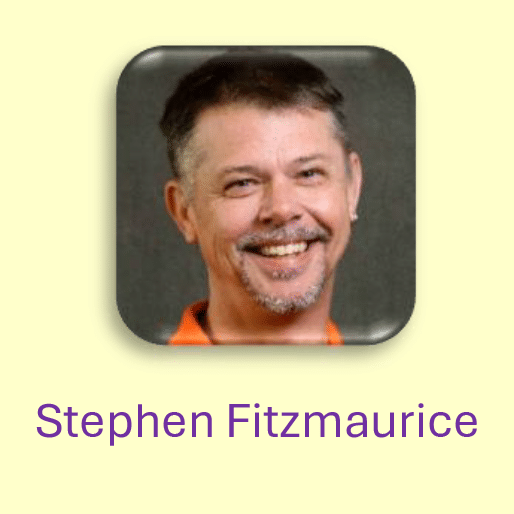
Dr. Stephen Fitzmaurice is a Professor of Interpreting: American Sign Language (ASL), and lead faculty for the ASL-English Educational Interpreting program at Clemson University. He earned his Ph.D. in Interpretation from Gallaudet University and a Master of Interpreter Pedagogy degree from Northeastern University. Dr. Fitzmaurice holds several national interpreter certifications and has worked as a professional ASL-English interpreter for over
35 years and authored several research articles and books on educational interpreting. Dr. Fitzmaurice lectures extensively on developing interpreting skills for in-service ASL-English educational interpreters and educational access via interpreting services.
Title: “ASL Proficiency Outcomes: Comparing In-Person and Online Instruction”
Description:
This poster examines whether instructional modality affects ASL proficiency among 28 undergraduate ASL
majors who completed 44 credit hours at a southeastern U.S. university. ASLPI scores were significantly higher
for students completing all courses in person (n = 15; M = 2.47, SD = 0.48) than for those taking at least four courses online (n = 13; M = 1.62, SD = 0.71), with a large effect (Hedges’ g = 1.36). The findings suggest
online environments may limit spontaneous fluency in a visual- spatial language requiring embodied, real-time interaction. Although online instruction expands access and flexibility, these outcome differences have implications for ASL pedagogy, interpreter education, program design, and online delivery decisions.
Educational Objective:
1) Analyze how instructional modality impacts ASL proficiency outcomes as measured by standardized external assessments.
2) Explain the pedagogical and modality-specific challenges associated with teaching and learning ASL in online environments.
3) Evaluate implications of online ASL instruction for interpreter education, language program development, and professional fluency outcomes.
Bio:
Dr. Stephen Fitzmaurice is a Professor of Interpreting: American Sign Language (ASL), and lead faculty for the ASL-English Educational Interpreting program at Clemson University. He earned his Ph.D. in Interpretation from Gallaudet University and a Master of Interpreter Pedagogy degree from Northeastern University. Dr. Fitzmaurice holds several national interpreter certifications and has worked as a professional ASL-English interpreter for over 35 years and has authored several research articles and books on educational interpreting. Dr. Fitzmaurice lectures extensively on developing interpreting skills for in-service ASL-English educational interpreters and educational access via interpreting services.
Title: “Roots in Equity: Race-Conscious Teaching Practices for Interpreter Educators”
Description:
Interpreter education programs serve culturally and linguistically diverse Deaf communities, yet little research examines faculty use of race-conscious teaching. Culturally responsive curricula may improve marginalized learners’ belonging, engagement, and success. Using a cross-sectional survey and the Culturally Responsive Higher Education Curriculum Assessment Tool, this study assesses these practices in Commission on Collegiate Interpreter Education (CCIE)-accredited programs. An online survey collected demographic and professional data and ratings of confidence in adopted and supplemental materials. Descriptive statistics, group comparisons, and correlations examined relationships with faculty experience, preparedness, and institutional support. Faculty reported often or always using race-conscious practices and culturally responsive materials, although confidence varied by domain and professional characteristics. The small sample (N =18–21) limited statistical power, and voluntary participation may have favored faculty already engaged in race-conscious pedagogy. Findings provide a baseline for professional development and curriculum revision in interpreter education.
Keywords: Commission on Collegiate Interpreter Education (CCIE), faculty members, interpreter education programs (IEP), race-consciousness, culturally relevant pedagogy, teaching practices
Educational Objectives:
By the conclusion of this presentation, participants will be able to:
1) Identify race-conscious teaching practices and class materials.
2) Summarize current teaching practices of the Commission on Collegiate Interpreter Education-accredited universities and colleges.
3) Determine if the curriculum integrates race-conscious material using the culturally responsive curriculum tool.
Bio:
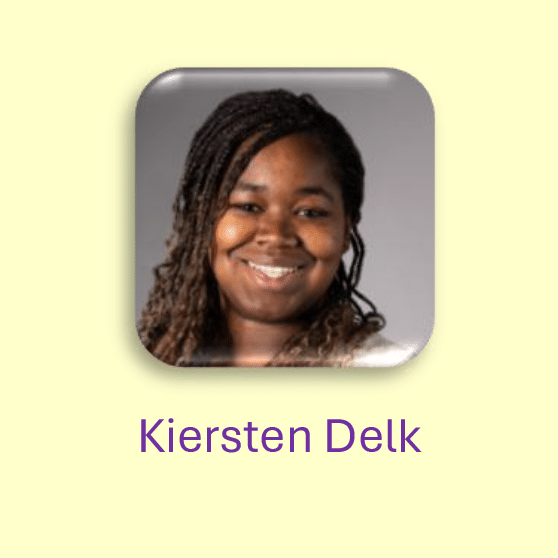
Kierstin Delk is a RIT/NTID graduate with a B.S. in ASL–English Interpreting. During her time at RIT, she has served on the executive board of the Student Interpreting Association and the Honors Program Council. She has also worked as a research assistant in the NTID SPaCE Center, a resident advisor, a learning assistant, and a student interpreter at the RIT Department of Access Services. Kierstin is a recipient of the Community Impact Award, Excellence in Student Life, NTID Outstanding Interpreting Student, and Student Beacon Award. In all her roles, she has strived to build and strengthen the campus community. She has supported programs and advocated for positive change, particularly on behalf of underrepresented students. Her learning extends beyond the classroom, where she conducted an independent study mentored by Jeni Rodrigues on race-conscious and culturally relevant teaching practices in interpreter education programs.

Title: “Answering the Call: A Qualitative Case Study of Dedication, Innovation, Responsibility, and Resilience
among ASL-English Interpreter Educators”
Workshop Description:
American Sign Language-English interpreter educators face many unique professional challenges (Webb & Napier, 2015). This research aims to investigate the current challenges they face and to share novel solutions they have implemented.
Educational Objectives:
1) Discover four specific challenges interpreter educators are facing today.
2) Examine how interpreter educators are responding to and facing those challenges.
3) Explore further research needed in this space.
Bio:
Randy Thuesen, MS, NIC, BEI Master, BEI Court, brings a wealth of experience shaped by decades of connection with deaf, deafblind, and blind communities a journey that began in his Texas childhood and has guided his career ever since. As the coordinator of the ASLEI program and Senior Lecturer at the University of Northern Colorado, Randy is known for his engaging teaching style, commitment to creative and transformative interpreter education, and passion for helping interpreters grow with purpose. Beyond his extensive professional
background, Randy is grounded, relatable, and genuinely invested in the communities he serves.
Title: “Anti-racism in Action: From Theory to Daily Practice”
Workshop Description:
The principle “do no harm” underpins the development of an anti-racist practice.
Have you ever taken a Power, Privilege, and Oppression workshop, learned great information, but left thinking, “Now, how do I apply this?” or “What next?” Many workshops on diversity, equity, inclusion, belonging, and accessibility provide a strong foundation of understanding. Yet understanding does not always lead to change or actionable steps. In this workshop, you are invited to engage in self-reflection and interactive group work. Through the lens of the transformative justice model, the focus will be on changes we can make to establish anti-racist practices. The activities are intended to serve as examples that can be replicated for future professional development with interpreter practitioners, educators, and mentors, and to be incorporated into interpreter preparation curricula for students. Resources will be shared to support your continued development.
Educational Objectives:
In this workshop, participants are invited to:
1) Describe features of Whiteness that are barriers to anti-racist work
2) Develop strategies to de-center Whiteness
3) Name resources for continued anti-racist work
Bio:
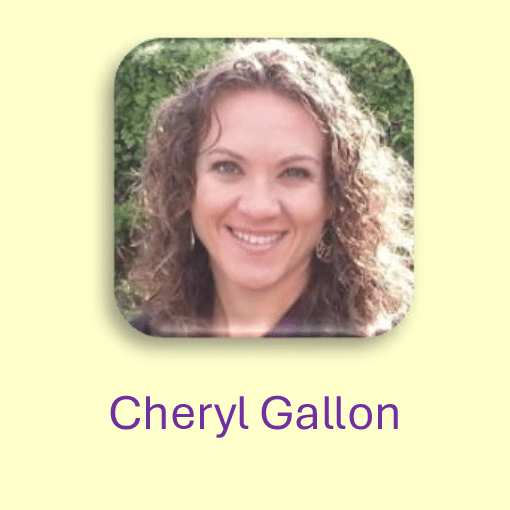
Cheryl Gallon, MA, CI, CT, NAD V, has been an ASL–English interpreter since 1995, primarily serving as a community-based interpreter in a wide variety of settings. She earned a Bachelor of Arts in Deaf Studies from California State University, Northridge, and a Master of Arts in Interpreting Studies and Communication Equity from St. Catherine University. Over the years, Cheryl has served the local interpreting community in a variety of support and leadership roles for the Sacramento Valley chapter of RID.
Since 2007, she has enjoyed supporting students’ growth as an adjunct faculty member in American River College’s Interpreter Preparation Program. Her research interests include ways to enhance diversity, equity, inclusion, belonging, and accessibility in interpreter practitioners, educators, and mentors.

Title: “RSA Roots as Foundation for Radiance”
Workshop Description:
Interpreter education is rooted in the support of the Department of Education – Rehabilitation Services Administration. With 4 awards for a new interpreter training grant expected before October 1, 2026, this support will continue for another five years. Come find out about the 4 grant recipients, learn about their projects and how they can benefit you as an educator, student, and working interpreter, and all of the people who rely on interpreting services. This is an opportunity to reflect on our roots and see how future projects can add to our field’s radiance.
Educational Objectives:
Participants will be able to:
1) List at least 5 past RSA-funded interpreter training projects and describe their impact on the interpreting profession;
2) Identify the four projects selected by the RSA for funding in 2026 and know how to contact each of the projects for more information and to provide feedback;
3) Describe the areas of focus for the four interpreter training projects
4) Reflect on ways that these projects might support their own efforts for professional development and raising the quality of interpreting services in their area.
Bio:
Doug Bowen-Bailey seeks innovative ways to support interpreters becoming reflective practitioners. He has worked with the CATIE Center at St. Catherine University since 2017, supporting novice interpreters and those working in healthcare settings. In addition to working with the CATIE Center, he interprets in the community when he can, provides mentoring services, and serves on several community boards. He received his MA in Interpreting Studies and Communication Equity in 2019 from St. Catherine University with a project focused on understanding best practices for teaching interpreters about power, privilege, and oppression. Doug lives in Duluth, MN, with his partner, Holly. His best thinking often happens while he is on a bicycle, and so is grateful for any chance to be out on the roads and trails on two wheels.
Jenny Smith-Hastings is a Program Specialist with the CATIE Center at St. Catherine University, where she has supported novice interpreters since 2018. She earned her BA in Interpretation from Gallaudet University and is passionate about helping new interpreters grow and succeed. She lives out in the country, where she enjoys a slower pace of life with her nine cats, chickens, and goats. When she’s not working, she can be found outside, playing in basketball and volleyball leagues, or taking care of her animals and plants.

Title: “The CURE: Integrating Undergraduate Research Experiences into ASL and Interpreter Education”
Workshop Description:
Course-based undergraduate research experiences (CUREs) have been linked to several positive student outcomes (Lopatto, 2009). CUREs also provide multiple benefits to time-strapped faculty members, such as increased scholarly productivity and documentable integration of teaching and research that contribute to career advancement (Hale & Freeman, 2025). The purpose of this interactive seminar is to share results of a multi-year research study and to provide participants with practical strategies for implementing CUREs into ASL and interpreter education. Our results indicate that even one semester of CURE participation provides multiple benefits to students that are not easily replicated through other avenues such as reading research findings or through community interactions alone. These benefits are possible without significant time from faculty or adjustments to curriculum, whether through a standalone course or through integrating smaller activities into existing courses. Thus, research need not be seen as a burden or another item to squeeze into the curriculum, but rather as an important avenue to support student learning. Ample time will be spent in discussion with our research assistants and session participants to identify practical implementation strategies for offering a CURE within their programs with attention to specific constraints currently facing academia.
Educational Objectives:
1) Describe the structure of one approach to offering group research experiences for undergraduates
2) Identify benefits of research experiences for undergraduate students
3) Identify benefits of establishing research lab group for faculty members
Bio:
Dr. Kimberly Hale is an assistant professor at Oklahoma State University. Her academic mission is to improve access and inclusion for Deaf people by enhancing ASL-English interpreter education. She studies working and learning in postsecondary institutions in the United States with an emphasis on faculty development and student outcomes. She shares actionable insights and tips for the faculty life on YouTube (@facultysuccesscoach). You can learn more about her research at KimberlyJHale.com.
Dr. Valerie Freeman is an associate professor and sociolinguist at Oklahoma State University, where she directs the Deaf Experience, Deaf Expression (DXDX) Project and the Sociophonetics Lab. In her collaboration with Kimberly Hale, she examines what students and researcher-instructors gain from social science course-based undergraduate research experiences (CUREs) like DXDX. Other projects examine regional dialects and training native/hearing listeners to better understand accented speech. You can read more about her research at sophon.okstate.edu.
Claire Baggett is a graduate student at Gallaudet University. She is currently working on her masters degree in speech pathology. During her undergraduate time at Oklahoma State University, she spent 5 semesters working on the Deaf Experience, Deaf Expression (DXDX) Project and was lab manager for the ATLAS Research Lab. She hopes to continue research at graduate school to learn more about ASL, the Deaf community, and contribute knowledge to her field.
Kaitlyn Ferguson is a recent graduate of Oklahoma State University, where she earned a BA in American Sign Language Studies. She plans to pursue a career in interpreting within the field of education. She recently presented at the OSU undergraduate research symposium about her work focused on the benefits of participating in ASL Studies research projects. She believes it is important to understand how students learn best so that we can uplift future interpreting students. Beyond academic and professional pursuits, she enjoys spending time with her family and spending time outdoors through hiking, camping, and fishing.
Title: “Digital ASL Curriculum: Implementing Zero Textbook Cost Resources in the Modern Classroom”
Workshop Description:
This session highlights the design and implementation of Zero Textbook Cost (ZTC) ASL courses using digital Open Educational Resources (OER) to support equitable, high-quality interpreter education. Grounded in the theme “Roots to Radiance,” the presentation demonstrates how foundational ASL instruction can expand into innovative, technology-enhanced learning experiences that center accessibility and inclusion. We will explore the development of the ADAPT digital curriculum and gain practical strategies for integrating ZTC materials into learning management systems across ASL and interpreter training programs. The session will also examine how collaborative, community-informed design supports culturally relevant pedagogy while addressing common barriers such as cost and outdated materials. Preliminary outcomes from pilot courses suggest increased student engagement, improved retention, and expanded access. Participants will leave with actionable approaches for adopting and adapting OER to strengthen program effectiveness and advance more sustainable, inclusive interpreter education pathways.
Educational Objectives:
1) Identify key components of a Zero Textbook Cost (ZTC) digital curriculum and how open educational resources (OER) can support accessibility and equity in ASL and interpreter education.
2) Describe strategies for integrating digital ZTC materials, including the ADAPT curriculum, into learning management systems (LMS- Canvas) for use in ASL courses and interpreter training programs.
3) Evaluate the impact of ZTC curriculum on student engagement, retention, and access within ASL and ITP classes.
Bio:
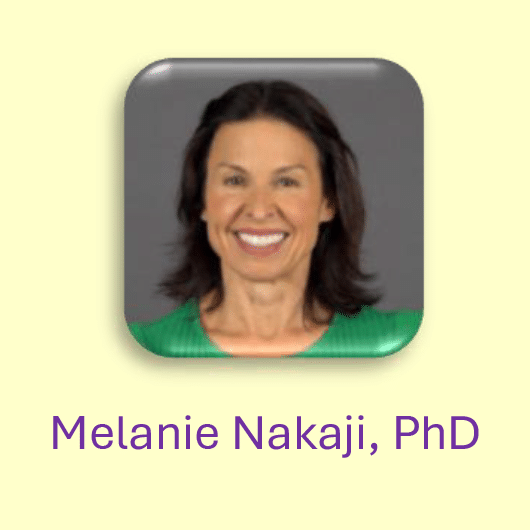
My name is Melanie Nakaji. I have a Ph.D. from the University of Northern Colorado in Rehabilitation Counseling. I’m the lead American Sign Language (ASL) professor and strive to modify my pedagogical strategies to meet students’ learning needs. Most recently, I received a large grant to develop Zero-Textbook Cost (ZTC) courses for all of the courses offered in the ASL major and certificate program. I am also the ZTC Coordinator at San Diego City College. My teaching philosophy centers around the notion that students will thrive in a group environment and when the concept of “fun” is interjected into the course!
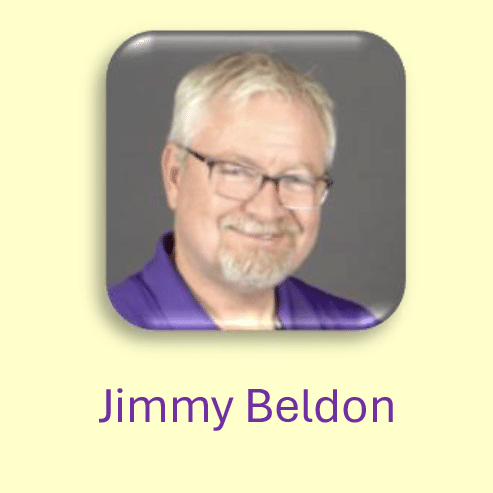
Jimmy Beldon is a distinguished Deaf professional with extensive expertise in American Sign Language (ASL), Deaf culture, and interpreter training. A native user of ASL, Jimmy holds a master’s degree in Deaf Education from Western Maryland College and is certified by the Registry of Interpreters for the Deaf (RID) as a Certified Deaf Interpreter (CDI). Jimmy has earned widespread recognition as a communication specialist and certified interpreter, particularly within the legal and court systems. Jimmy’s experience spans over 20 years in providing ASL translations for critical documents and handbooks. Currently, he is collaborating with several places on document ASL translation projects, working alongside talented local professionals and the state of California with a Zero-Cost Textbook project. Jimmy’s dedication to the field, combined with his deep understanding of Deaf culture and communication, has positioned him as a leader and advocate in the interpreting and Deaf communities.
NMRID is an Approved RID CMP Sponsor for continuing education activities. This Conference of Interpreter Trainers program is offered for 2.15 CEUs at the Knowledge Level Content Knowledge Level. The target audience for the CEUs includes interpreter educators, both hearing and Deaf, interpreters, ASL/SL instructors, and anyone who is interested in these topics.
Information about the refund and cancellation policy of the Sponsor. It is acceptable to print a link or Internet address identifying contact information, applicable registration policies, and all other registration information rather than the entire policy. A statement soliciting requests for reasonable accommodations from potential participants.
A statement identifying the Sponsor’s policies on non-discrimination and the promotion of learning environments of mutual respect that minimize or eliminate bias.
NOTE: this statement does not preclude “difficult conversations” and aims to create environments where learning and honest dialogue can happen.