
Keynote Title: Roots to Radiance: Beyond the Familiar. Reimagining Interpreter Education Across Communities, Cultures, and Borders
Keynote Description:
Interpreter education is at a crossroads. As our communities become more diverse, multilingual, and interconnected, the familiar approaches that shaped our profession may no longer be enough. In Beyond the Familiar, Su Isakson and Danilo Torres explore what the future of interpreter education might become when we learn from the communities, languages, and experiences that have too often existed at the margins of our field. Drawing from lived experience, international engagement, Deaf community leadership, and educational innovation, these two keynotes invite us to imagine a future rooted in belonging, cultural humility, adaptability, and connection across communities, cultures, and borders.
Educational Objective:
1) Describe on your Reflection on how Deaf community experiences, family histories, and cultural identities can inform the future of interpreter education.
2) Discuss the knowledge, skills, and dispositions interpreters need to navigate communication across communities, cultures, languages, and borders.
3) Explain their vision of innovative approaches to interpreter education that expand belonging, strengthen adaptability, and respond to the evolving needs of Deaf communities worldwide.
Bio:
Su Kyong Isakson, MA, NIC, EIPA 5.0, is an Associate Professor of Interpreting with 15 years of professional experience consulting, presenting and training internationally. Informed by her formative experience as a Korean-American raised by deaf parents, she is passionate about how intercultural communication informs our work as interpreters.
Danilo E. Torres V. is a Deaf Colombian-American educator, multilingual interpreter, accessibility advocate, and community leader. He serves at Gallaudet University’s Center for Black Deaf Studies. With extensive experience in International Sign, higher education, and global engagement, he promotes equitable opportunities for Deaf communities worldwide through collaboration.
RID CEUs Offered: .10
Plenary Title: Beyond Technology and AI: Envision the Future of Sign Language, Interpreter Education, and Human Connection
Plenary Description:
Artificial intelligence is rapidly becoming part of how we learn, teach, communicate, and work, but what exactly is AI, how did we arrive at this moment, and what does it mean for the future of sign language and interpreting?
This plenary will begin by exploring the evolution of AI and the forces that have brought it into our classrooms, workplaces, and everyday lives. Participants will examine how AI already influences sign language and interpreter education and professional practice, as well as the capabilities and limitations of current and emerging AI tools. Through practical examples, presentations, and video demonstrations, the session will highlight ways AI can support curriculum and instructional design, interpreting preparation, and practice.
Beyond the technology itself, this plenary invites us to consider a larger and more important question: What kind of future do we want to create? As AI continues to evolve, how can we use it thoughtfully while ensuring that sign language, human connection, professional judgment, and the lived experiences of signing communities remain at the heart of interpreter education and practice?
Educational Objective:
By the end of the session, participants will be able to:
1) Identify at least three ways AI can support interpreter education and professional practice.
2) Describe key features and capabilities of AI tools relevant to interpreter educators and practitioners.
3) Explain at least two ways AI features can enhance curriculum and instructional development.
Consider how AI can be integrated into interpreter education while maintaining the importance of human connection, professional judgment, and sign language-centered practice.
Bio:
Natalie Jordaan is a Deaf software developer, AI educator, and founder of DeafGeeky in South Africa. Passionate about making artificial intelligence accessible, she empowers Deaf communities through simple, practical AI education. With over 14 years of software development experience, Natalie helps educators, professionals, and creators use AI to increase accessibility, creativity, confidence, and independence.
RID CEUs Offered: .10
Plenary Title: Nested Context: Tools for Renewing Interpreting in the AI Moment
Plenary Description:
AI is already changing how we work, communicate, and access information. What happens when it begins doing more of the work interpreters do? What if sign language recognition (SLR) by artificial intelligence (AI) becomes comparable to the receptive skills of most interpreters? Using “nested contexts” – think of Russian matryoshka dolls where each doll fits neatly inside a slightly larger one – this presentation looks beyond individual interpreter performance to explore historical trends and the larger social environment surrounding interpreted interaction. Is AI our competitor? Our Partner? Both? The AI challenge opens up the social situations in which interpreting occurs, inviting the members of CIT to make a fresh, proactive contribution to today’s intersectional challenges. We introduce CoSET S.A.F.E. AI, a think tank devoted to upholding the integrity of communication during interpreted interaction. Rather than simply asking whether AI will change interpreting, CoSET S.A.F.E. AI asks: How can interpreter educators help shape that change? The field needs tools to strengthen cognitive skills for interpreters and also primary communicators, both h/Hearing and Deaf. These tools build competence for the range of ‘moves’ and ‘turns’ possible during interpreted interaction. On the basis of accumulated professional wisdom, interpreter educators can inform and guide the ways that AI interpreting is distributed through society.
Educational Objective:
Participants will be able to:
1) Define the concept of “nested contexts” using at least one example across three or more levels of ‘nesting’
2) Illustrate an example of how shifts among or across nested contexts affect the cooperation required among primary communicators and interpreter(s)
3) Analyze an interpreted interaction for the range of possible “moves” and “turns” available to participants
Bio:
Stephanie Jo Kent, CI, PhD. Steph, an ethnographer and interpreter, believes interpreted interaction works best when the conditions are designed for people—not just technology. Her action research explores how languages, cultures, and AI can strengthen the integrity of communication by supporting human collaboration among equals, enabling understanding to flow both ways.
Molly Glass is a Deaf Interpreter, ASL Project Coordinator, and advocate with expertise in AI and hybrid driven sign language translation. As a member of the CoSET Leadership Circle, she works to ensure emerging technologies are designed with Deaf communities through ethical, inclusive, and language-first practices.
RID CEUs Offered: .10
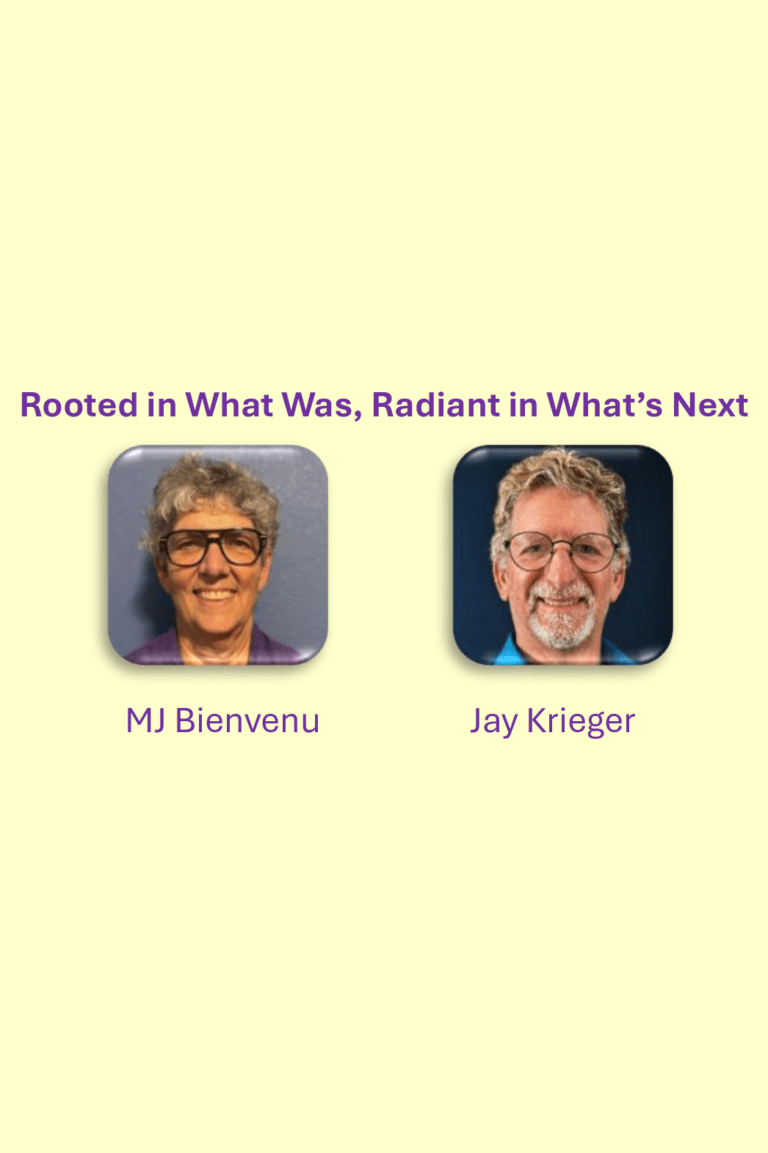
Endnote Title: Rooted in What was, Radiant in What’s Next
Endnote Description:
Krieger and Bienvenu will present a synthesis of the conference presentations, highlighting key themes and insights while offering encouraging perspectives on the path ahead for CIT. With the emergence of AI and evolving approaches to teaching and learning, this closing presentation will invite interpreter educators to reflect on the future of interpreter education and the opportunities and challenges that lie ahead.
Educational Objectives:
Conference attendees will leave with food for thought and opportunities for critical self-reflection on their work as interpreter educators.
They will be able to:
1) Examine current approaches to interpreter education
2) Describe how today’s changing landscape—including the use of AI and other emerging technologies, as well as increasingly diverse classrooms that include both Deaf and non-Deaf students
3) Explain at least three ways on how we teach, learn, and prepare the next generation of interpreters.
Bio:
MJ Bienvenu is a pioneering Deaf ASL scholar, educator, and activist. A longtime Gallaudet University professor, she has advanced ASL, Deaf culture, bilingual and interpreter education, LGBTQIA+ activism, and social justice. Since 1983, she has helped shape interpreter education through her leadership with the Conference of Interpreter Trainers.
Jay Krieger is a Certified Deaf Interpreter with 15 years of interpreting experience, including 10 years in ASL-English translation, and more than 30 years of experience in technology. He was among the founders of the National Deaf Interpreter (NDI), Deaf Interpreter Conference (DIC), and the first National Deaf Translator (NDT) Summit. He is passionate about legal interpreting, translation, and innovation.
RID CEUs Offered: .10
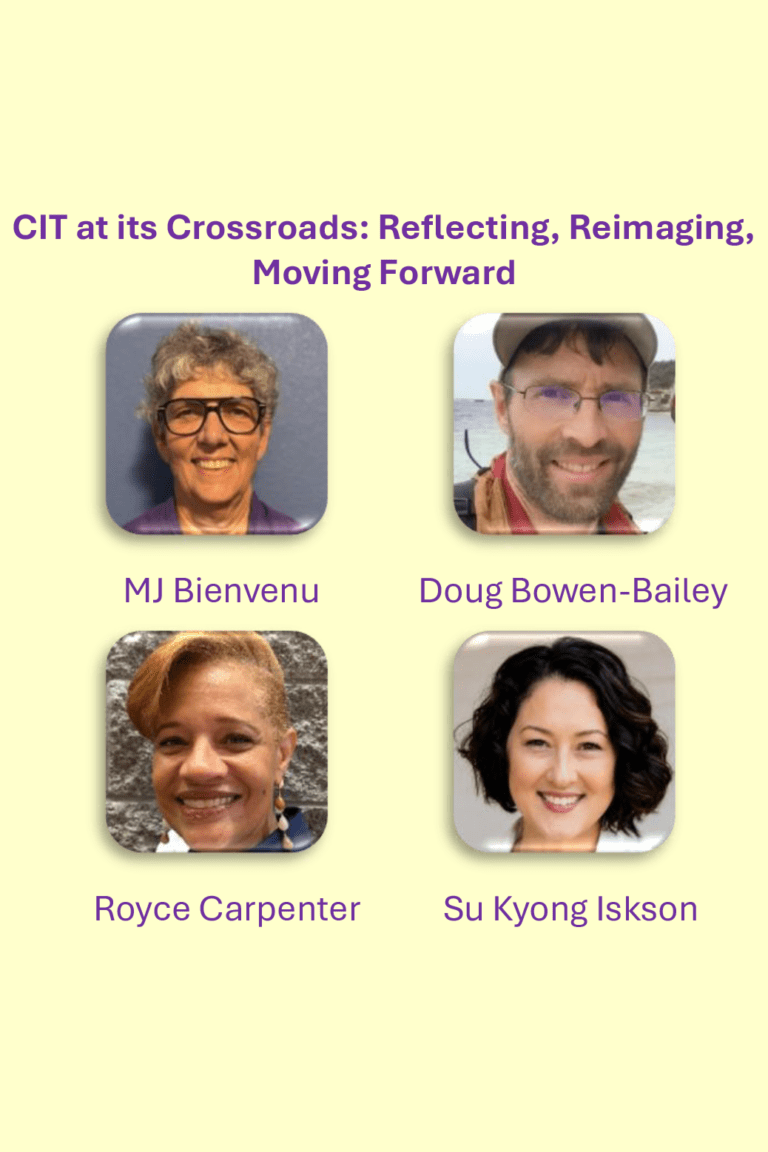
Workshop Title: “CIT at the Crossroads: Reflecting, Reimagining, Moving Forward”
Workshop Description:
This interactive plenary will bring the CIT community together to reflect on our history, consider where we are today, and help shape where we go next.
Three conference panelists representing different perspectives and experiences within CIT will guide the session. Ideally, we would have someone with deep knowledge of CIT’s history, someone with experience in CIT leadership and sign language and interpreter education, and someone who can help us think about CIT’s future. Rather than a traditional panel, this will be a community conversation. The conversation leaders would help set the stage, but the voices of the participants would be central to the plenary. Critical questions will be used for community conversations through breakout groups and sharing the main points of the discussions.
This presentation introduces an innovative Open Educational Resource (OER) Digital Workbook designed to strengthen foundational skill development in American Sign Language (ASL) interpreter education. Created as a collaborative, cross-institutional effort, the workbook responds to a critical need for accessible, affordable, and high-quality instructional materials in a field where resources are often limited and costly. Grounded in the principles of Universal Design for Learning (UDL), Diversity, Equity, Inclusion, and Accessibility, this OER promotes equitable learning opportunities while supporting diverse student needs and learning styles. The workbook is organized into targeted modules that address five key areas of skill development: Message Comprehension, Message Analysis, Content and Context Comprehension, Facilitating Meaning, and Prosody—areas identified by educators as common gaps in student proficiency. Each module features structured lessons, interactive activities, and assessment tools designed to foster engagement and mastery through scaffolded learning. Developed during a 2026 sabbatical, the project incorporates ongoing collaboration and feedback from interpreter education programs nationwide. As one of the first open-access resources of its kind, this OER provides a flexible, adaptable framework that enhances instructional consistency, reduces financial barriers, and better prepares students for success in the interpreting profession.
Educational Objectives:
By the end of the session, participants will be able to:
1) Identify ways CIT has influenced the development of sign language and interpreter education.
2) Examine key challenges and opportunities facing CIT and the broader sign language and interpreter education community.
3) Identify priorities and recommendations that can help guide CIT’s future direction, programming, and conferences.
Bio:
MJ Bienvenu is a pioneering Deaf ASL scholar, educator, and activist. A longtime Gallaudet University professor, she has advanced ASL, Deaf culture, bilingual and interpreter education, LGBTQIA+ activism, and social justice. Since 1983, she has helped shape interpreter education through her leadership with the Conference of Interpreter Trainers.
Doug Bowen seeks innovative ways to support interpreters becoming reflective practitioners. He has worked with the CATIE Center at St. Catherine University since 2017, supporting novice interpreters and those working in healthcare settings. In addition to working with the CATIE Center, he interprets in the community when he can, provides mentoring services, and serves on several community boards. He received his MA in Interpreting Studies and Communication Equity in 2019 from St. Catherine University with a project focused on understanding best practices for teaching interpreters about power, privilege, and oppression. Doug lives in Duluth, MN, with his partner, Holly. His best thinking often happens while he is on a bicycle, and so he is grateful for any chance to be out on the roads and trails on two wheels.
Dr. Royce M. Carpenter is a Professor and Interpreter Education and Practicum Program coordinator.
She has interpreted in many settings for 26 years and has been teaching for 19 years. Dr. Carpenter is also a trainer and workshop presenter on cross-cultural mentoring, diversity, equity, and inclusion, and leadership cultural competency for higher education institutions, for-profit and non-profit organizations. Carpenter’s work includes teaching and facilitating courageous conversations necessary for interpreters, students, educators, leaders, and communities to look outward and within. She says understanding oneself and others is an important steppingstone to equality and inclusion. Royce holds a Registry of Interpreters for the Deaf, National Interpreter
Certification: Master level. In addition, she has an Applied Associate of Arts degree in Interpreting/Transliterating from Columbus State Community College, a Bachelor of Science degree in Organizational Management from Wilberforce University, a Master of Arts degree in Teaching Interpreting Studies from Western Oregon University, and a Higher Education Specialist Ed.S. degree and a Higher Education and Leadership Ed.D. from National Louis University.
Su Isakson MA, NIC, EIPA 5.0, is an Associate Professor of Interpreting with 15 years of professional experience consulting, presenting, and training internationally. Informed by her formative experience as a Korean-American raised by deaf parents, she is passionate about how intercultural communication informs our work as interpreters.
RID CEUs Offered: .10
NMRID is an Approved RID CMP Sponsor for continuing education activities. This Conference of Interpreter Trainers program is offered for 2.15 CEUs at the Knowledge Level Content Knowledge Level. The target audience for the CEUs includes interpreter educators, both hearing and Deaf, interpreters, ASL/SL instructors, and anyone who is interested in these topics.
Information about the refund and cancellation policy of the Sponsor. It is acceptable to print a link or Internet address identifying contact information, applicable registration policies, and all other registration information rather than the entire policy. A statement soliciting requests for reasonable accommodations from potential participants.
A statement identifying the Sponsor’s policies on non-discrimination and the promotion of learning environments of mutual respect that minimize or eliminate bias.
NOTE: this statement does not preclude “difficult conversations” and aims to create environments where learning and honest dialogue can happen.