Workshop Title:
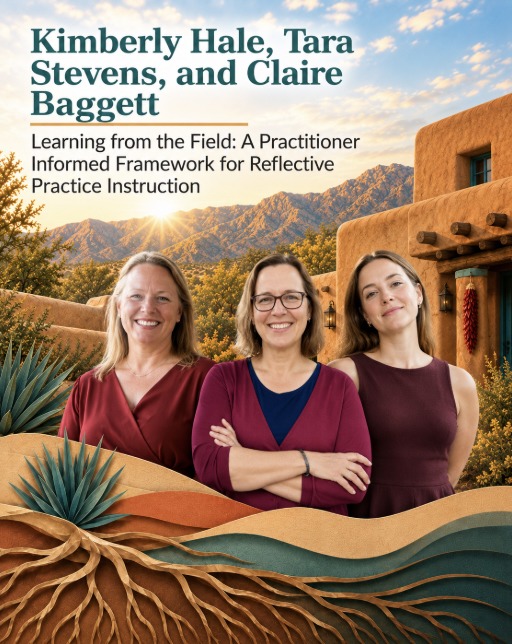
“Learning from the Field: A Practitioner Informed Framework for Reflective Practice Instruction”
Workshop Description:
Self-reflection is an essential part of professional interpreting practice. The aim of the presentation is to improve the teaching of reflective practices through an increased understanding of how professional interpreters practice reflection.
The research team explored how professional interpreters developed and engaged with reflection before, during, and after interpreting assignments through semi-structured interviews with 21 professional interpreters. Participants’ (ages 21 to 65 years) professional experience ranged from 1 to 35 years across varied settings, reflecting the breadth of interpreter practice in Oklahoma. The sample represented diverse educational backgrounds, with associate’s degrees through doctoral degrees.
Interview data were analyzed and categorized by undergraduate research assistants, with assistance from the faculty mentor. Practices were categorized according to when (i.e., before, during, or after interpreting), with whom (i.e., independently, with colleagues, with mentors, with non-field-related individuals), and how (i.e., journaling, conversations, reviewing videos, etc.) they were completed.
This presentation provides a classification system of reflective practices, which allows students to integrate new techniques into a known framework of practices. Building on the practices reported by participants, the research team will provide suggested scaffolding, activities, and assignments for teaching and practicing reflective practices throughout an interpreter education program.
Educational Objectives:
1) Discuss results of the study detailing when and how professional interpreters engage in reflective practice.
2) Discuss scaffolding reflective practices across the curriculum.
3) List 3 specific activities that can be used to teach specific reflection techniques.
Bio:
Dr. Kimberly Hale is an assistant professor at Oklahoma State University. Her academic mission is to improve access and inclusion for Deaf people by enhancing ASL-English interpreter education. She studies working and learning in postsecondary institutions in the United States with an emphasis on faculty development and student outcomes. She shares actionable insights and tips for the faculty life on YouTube (@facultysuccesscoach). You can learn more about her research at KimberlyJHale.com.
Tara Stevens, CI and CT, is an Associate Professor in the ASL and Interpreter Education program at Eastern Kentucky University. Research interests include the study of intercultural competency and cultural humility, language ideologies and attitudes, reflective practice, and use of flipped learning in the classroom.
Claire Baggett is a graduate student at Gallaudet University. She is currently working on her master’s degree in speech pathology. During her undergraduate time at Oklahoma State University, she spent 5 semesters working on the Deaf Experience, Deaf Expression (DXDX) Project and was lab manager for the ATLAS Research Lab. She hopes to continue research at graduate school to learn more about ASL, the Deaf community, and contribute knowledge to her field.
RID CEUs Offered: .15